
How Smart Store Layouts Increase Sales Per Square Metre

Retail success is often measured in total revenue. A stronger indicator sits beneath that figure, sales per square metre. It reveals how effectively a store converts physical space into profit.
Rent, staffing, electricity and fit out costs are tied to floor area. If space underperforms, margins shrink. When layout is optimised, the same footprint can produce significantly higher returns without increasing overheads.
Smart layouts are not aesthetic decisions alone. They are structured revenue systems.
The Psychology Behind Smart Store Layouts
Customers rarely move randomly. Their behaviour follows patterns shaped by layout, visibility and perceived comfort.
A well designed store considers:
- Decompression zones, the first few metres where customers adjust to the environment
- Clear sightlines, allowing shoppers to identify categories quickly
- Natural traffic flow, guiding customers through high margin areas
- Impulse positioning, placing complementary products in transition zones
When customers feel oriented rather than overwhelmed, dwell time increases. Longer dwell time often correlates with higher basket value.
Layout influences behaviour quietly, yet consistently.
Space Efficiency Starts With Measurement, Not Guesswork
Many retailers design shelving based on instinct or supplier recommendations. A more reliable method begins with calculation.
Consider the impact of common miscalculations:
- Too many facings can create clutter and reduce perceived value
- Too few facings increase the risk of empty shelves during peak periods
- Incorrect shelf depth limits stock holding capacity
- Poor vertical planning leaves unused height above eye level
Before committing to a final configuration, retailers can model expected product volume, refill frequency and facing requirements using a retail shelf space calculator. Planning at this stage reduces costly redesigns later and aligns shelf allocation with actual sales velocity rather than assumption.
Layout Structures That Consistently Drive Higher Returns
Different retail categories benefit from different structural approaches. There is no universal template, yet certain models repeatedly outperform when applied correctly.
Grid Layout
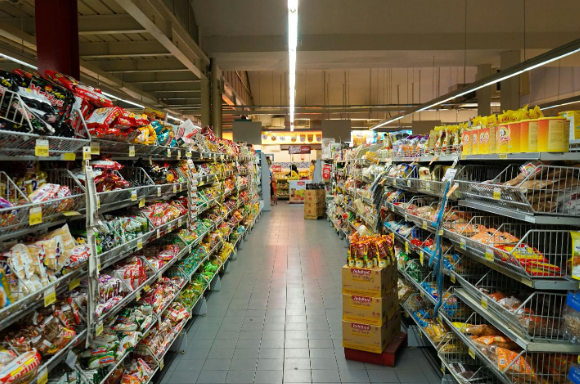
Common in supermarkets and hardware stores. Predictable aisles maximise product exposure and make restocking efficient. High density categories benefit from this format.
Loop Layout
Customers follow a defined pathway that exposes them to multiple categories before reaching checkout. Ideal for fashion and lifestyle retailers aiming to increase discovery.
Free Flow Layout
More relaxed and open. Encourages exploration and suits boutique environments where experience is central to the brand.
Hybrid Layout
Combines structured aisles with open promotional areas. Frequently used in modern convenience retail where both efficiency and flexibility are required.
The choice of layout influences how many products are seen, touched and ultimately purchased.
The Role of Shelving in Revenue Optimisation
Shelving determines how effectively vertical space contributes to turnover.
A store with standard ceiling height has unused potential if shelving is not configured strategically.
Adjustable systems allow retailers to respond to seasonal changes. Higher margin items can be placed at eye level. Bulk or slower moving stock can sit lower or higher without compromising visibility.
Well planned shelving transforms static square metres into dynamic selling capacity.
Why Mills Shelving Supports Smarter Layouts
Executing a high performing layout requires more than floor plans. The structure holding the products must support flexibility, load capacity, and long term scalability.
Mills Shelving works with retailers across Australia to design shelving systems that align with real sales patterns rather than theoretical store drawings. Their approach focuses on practical variables:
- Correct bay spacing to maintain flow and visibility
- Shelf depth matched to product dimensions
- Adjustable configurations to support seasonal range changes
- Durable systems that withstand commercial traffic
Rather than forcing a store to adapt to rigid fixtures, modular shelving allows layouts to evolve as categories expand or contract. That adaptability protects revenue over time.
Retailers who plan shelving correctly at the outset often avoid expensive refits later.
Common Layout Mistakes That Reduce Sales Per Square Metre
Small design errors compound daily. The following issues frequently limit performance.
| Mistake | Revenue Impact |
|---|---|
| Overcrowded shelves | Reduced product visibility and lower perceived value |
| Narrow aisles | Customer discomfort and shorter dwell time |
| Poor category adjacencies | Missed cross selling opportunities |
| Dead zones near entrance | Underutilised premium traffic areas |
| Fixed, non adjustable fixtures | Inability to respond to demand shifts |
Each of these issues reduces the efficiency of the same physical footprint. When multiplied across months or years, the financial impact becomes significant.
Measuring Success After Implementation
Improving layout is not a one time project. Performance should be tracked and refined.
Retailers can monitor:
- Sales per square metre at category level
- Average basket value before and after layout changes
- Sell through rates for promoted zones
- Dwell time in high margin areas
Even minor improvements in conversion rate can lift overall profitability without increasing advertising spend or store size.
Continuous refinement separates average stores from high performing ones.
Smart Layouts Compound Over Time
Every square metre in a retail environment carries cost. The question is whether it also carries proportional revenue.
Smart layouts maximise visibility, guide behaviour, and use vertical space effectively. When supported by properly planned shelving systems, the same floor area can generate stronger returns year after year.
Retail growth does not always require more space. Often, it requires using existing space more intelligently.
When layout decisions are treated as revenue decisions, sales per square metre stops being a statistic and becomes a competitive advantage.